
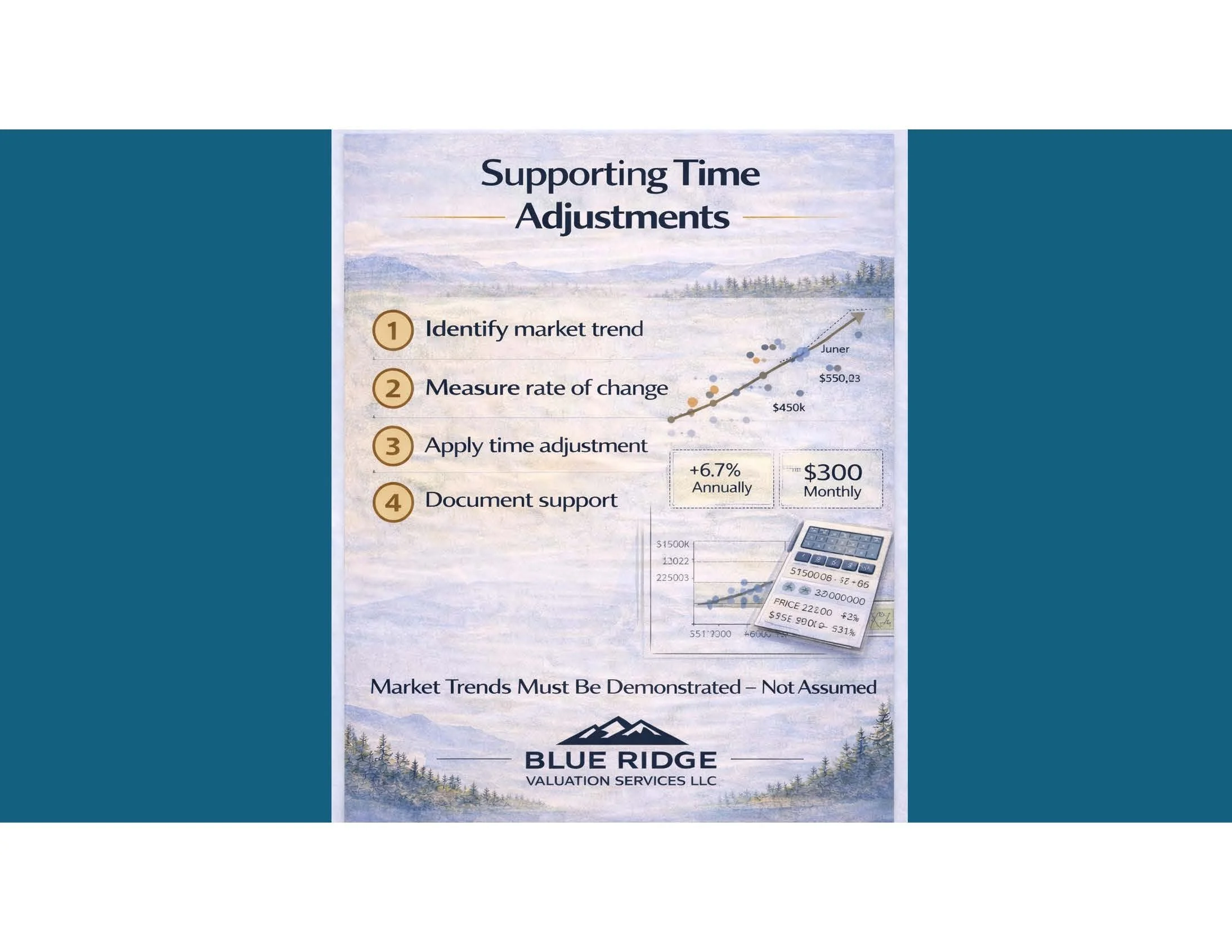
Supporting Time Adjustments in Changing Markets
Article 8 — Supporting Time Adjustments in Changing Markets
Time adjustments are among the most commonly applied and least carefully supported adjustments in the sales comparison approach. In a stable market, that gap may not matter much. In a rapidly shifting one, it can undermine an otherwise sound value conclusion. This article examines the methods available for deriving and documenting time adjustments — including repeat sales analysis, market indices, and regression on time-stratified data — with particular attention to a common and consequential error: applying a uniform monthly rate across a period when the market was actually moving unevenly.
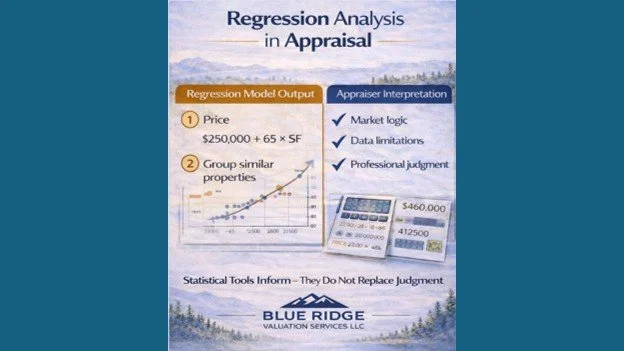
Regression: Helpful Tool or False Precision?
Article 7 — Regression: Helpful Tool or False Precision?
Regression analysis is the most statistically sophisticated tool available for adjustment support and one of the most frequently misapplied. This article examines when regression genuinely strengthens an adjustment conclusion, what the underlying data requirements actually are, and what goes wrong when it is applied to data sets too thin to produce statistically meaningful results. The goal is not to discourage regression. It is to help appraisers use it correctly and recognize when the data is telling them not to rely on it without additional support.
Grouped Data & Market Extraction Methods
Article 1 of 9 | The Adjustment Series
The appraisal profession is operating in an environment of heightened scrutiny and nowhere is that scrutiny more sharply focused than on adjustment methodology in the sales comparison approach. In this opening article of The Adjustment Series, Timothy J. Hansen, RPRA, MNAA examines the forces driving increased demand for defensible adjustment support from tightening regulatory oversight and fair lending concerns, to the growing use of automated valuation models as benchmarks, to the adversarial demands of litigation and eminent domain work. The article establishes the foundational principle that guides the entire series: supporting your adjustments is not about adding complexity to every report, but about being able to clearly articulate why you made the adjustments you did, what market evidence supports them, and how a reviewer or court should evaluate them. Whether you are preparing for a challenging review or heading into litigation, this article explains why the quality of your adjustment support is no longer just a best practice — it is a core component of professional credibility.
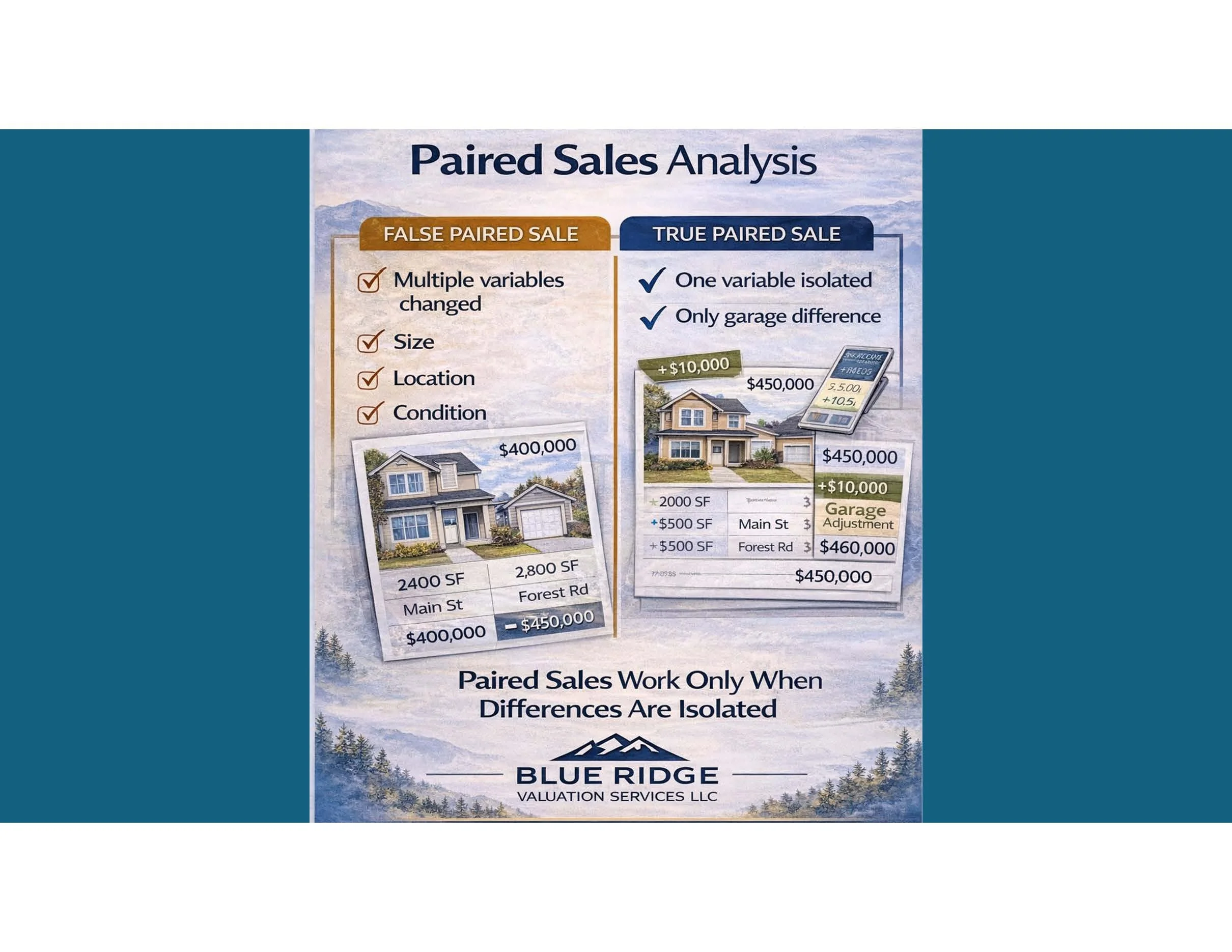
Paired Sales: Powerful but Often Misapplied
Article 5 — Paired Sales: Powerful but Often Misapplied
One paired sale is an observation. Several consistent paired sales begin to look like a pattern. A pattern is what supports an adjustment.
Paired sales analysis is one of the most cited methods for supporting adjustments — and one of the most frequently misused. This article examines the three failure modes that undermine paired sales analysis in practice: too few transaction pairs, cherry-picking data to confirm a predetermined conclusion, and inadequate similarity between the paired properties.
It also shares a piece of wisdom from the late Henry Long, ARA, whose memorable caution about confounding variables has stuck with me for decades.
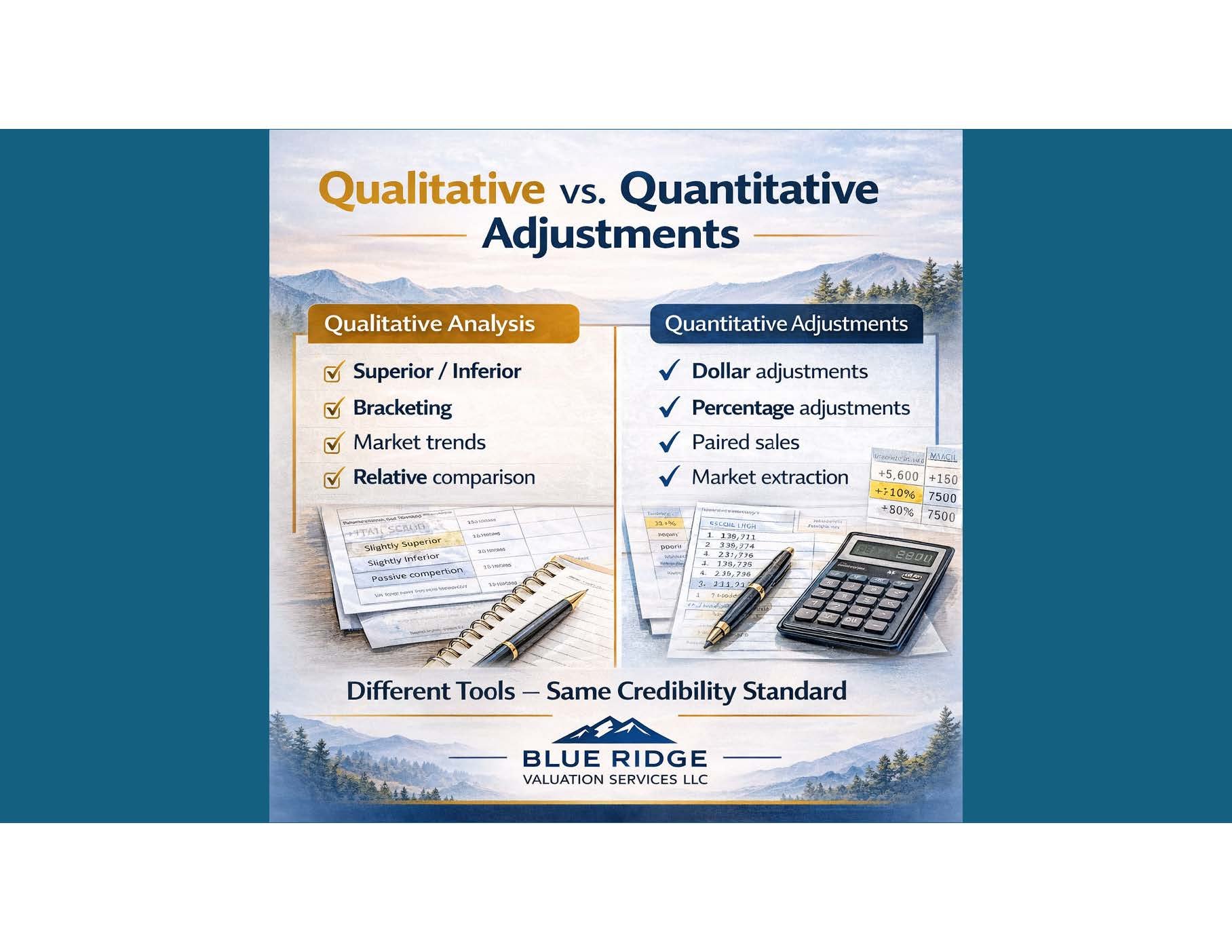
Qualitative vs. Quantitative Adjustments: Different Tools — Not Different Standards
Article 4 — Qualitative vs. Quantitative Adjustments: Different Tools — Not Different Standards
A dollar figure does not make an adjustment more credible. The market evidence behind it does.
Article 4 of The Adjustment Series is live: Qualitative vs. Quantitative Adjustments: Different Tools — Not Different Standards.
This article tackles one of the most persistent misconceptions in appraisal practice — that quantitative adjustments are inherently more defensible than qualitative ones. They are not. What determines credibility is whether the adjustment is grounded in market evidence and communicated clearly, regardless of whether it is expressed as a number or a direction.
We also cover an important middle ground that does not get discussed enough: how limited quantitative evidence can inform a qualitative conclusion without overstating what the data can prove.
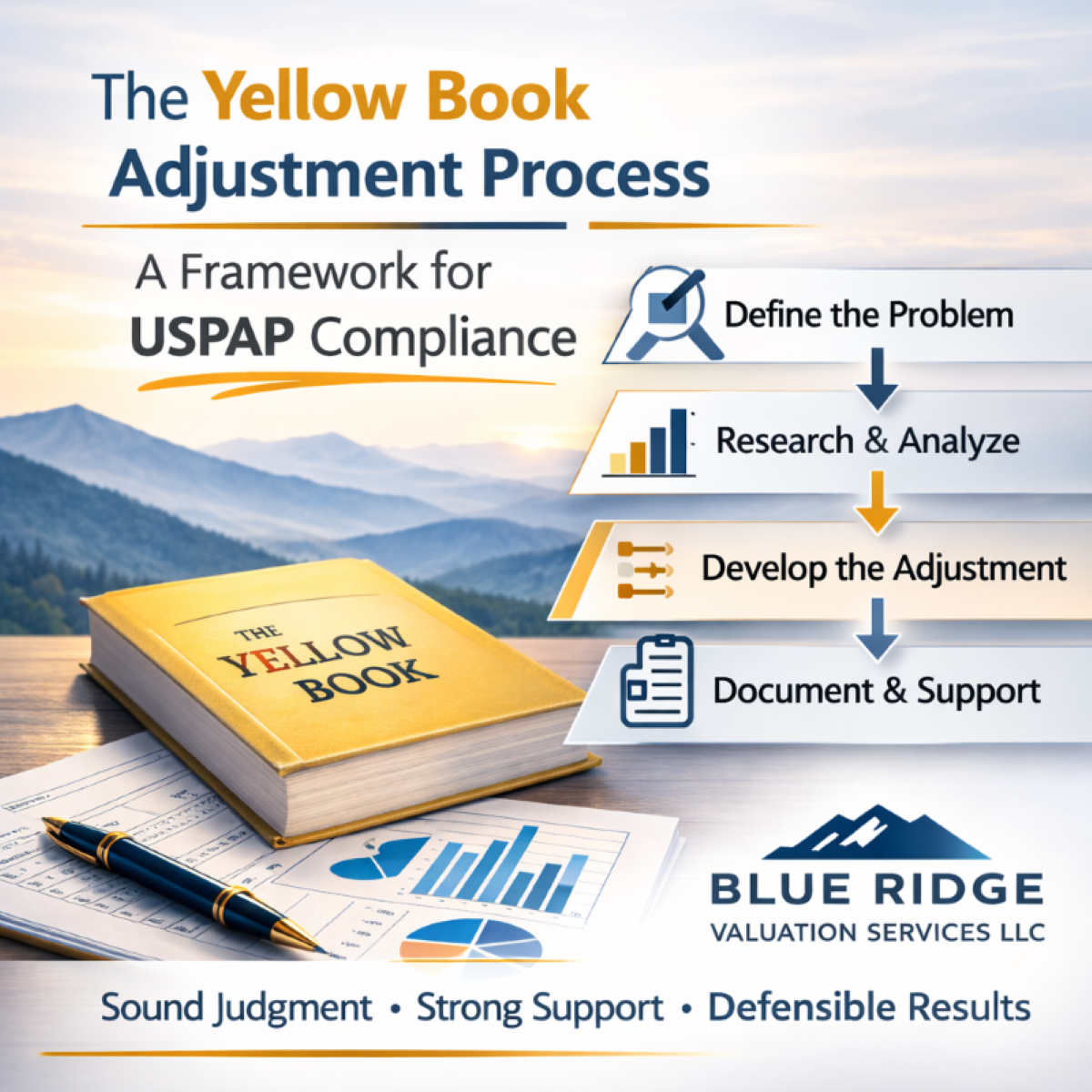
What the Yellow Book Adds — and Why It's Different
Article 1 of 9 | The Adjustment Series
The appraisal profession is operating in an environment of heightened scrutiny and nowhere is that scrutiny more sharply focused than on adjustment methodology in the sales comparison approach. In this opening article of The Adjustment Series, Timothy J. Hansen, RPRA, MNAA examines the forces driving increased demand for defensible adjustment support from tightening regulatory oversight and fair lending concerns, to the growing use of automated valuation models as benchmarks, to the adversarial demands of litigation and eminent domain work. The article establishes the foundational principle that guides the entire series: supporting your adjustments is not about adding complexity to every report, but about being able to clearly articulate why you made the adjustments you did, what market evidence supports them, and how a reviewer or court should evaluate them. Whether you are preparing for a challenging review or heading into litigation, this article explains why the quality of your adjustment support is no longer just a best practice — it is a core component of professional credibility.
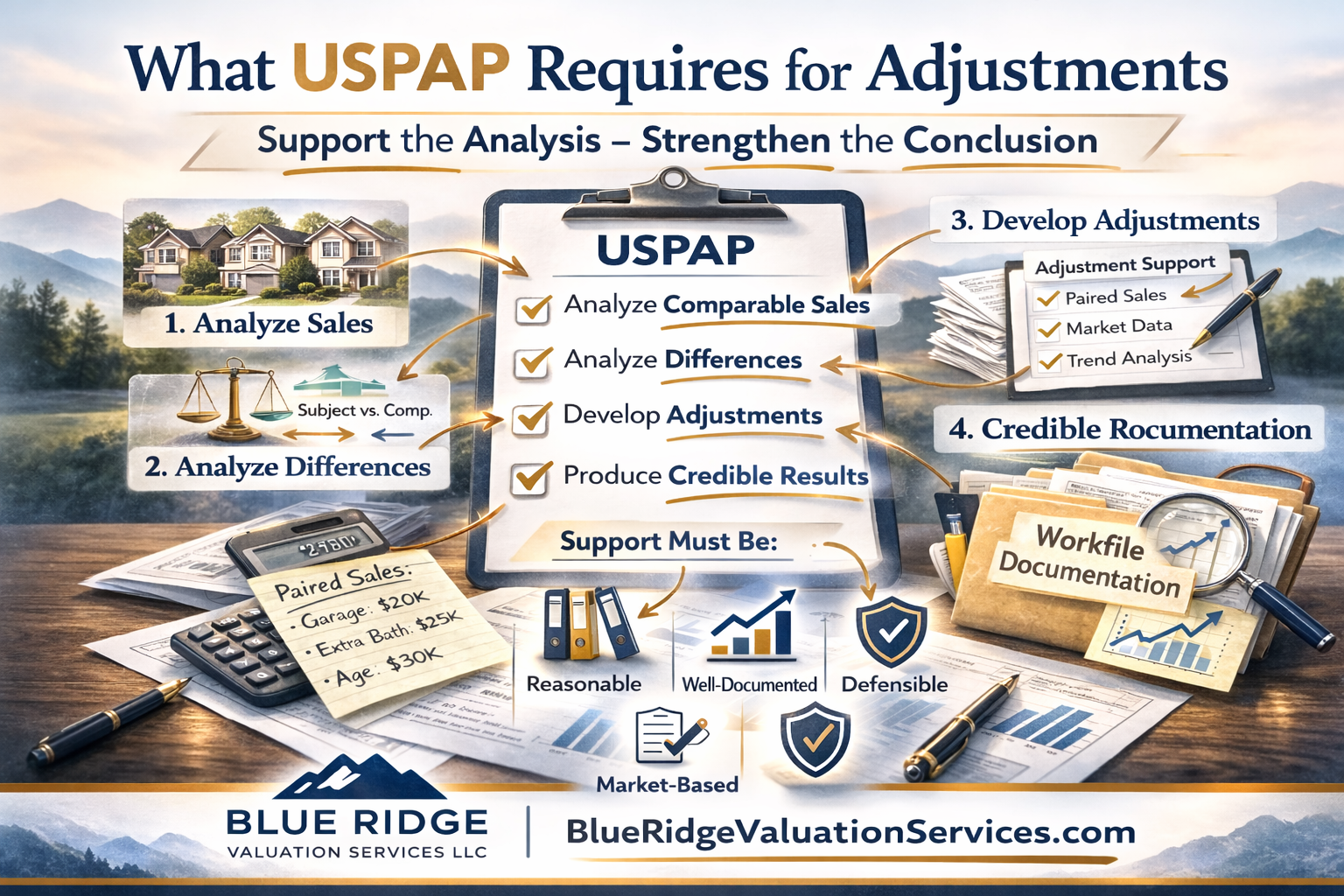
What USPAP Requires for Adjustments
Article 1 of 9 | The Adjustment Series
Many appraisers carry assumptions about what USPAP requires for adjustment support that turn out to be incomplete or simply wrong. In this article, Timothy J. Hansen cuts through the confusion and examines exactly what the standards demand and what they do not. Drawing on Standards Rules 1-1, 1-4, 2-1, and 2-2, the article explains how USPAP's credibility standard applies to adjustments, why the requirement to analyze comparable data means something more than listing it, and how the reporting obligations of SR 2 require that the analytical work not just performed but communicated effectively. The article also addresses one of the most widespread misconceptions in appraisal practice: that boilerplate language about professional judgment satisfies the standard. It does not. Understanding what USPAP actually requires is the foundation for every methodological decision in the sales comparison approach, and this article provides that foundation clearly and practically.
Why Adjustment Support Matters More Than Ever
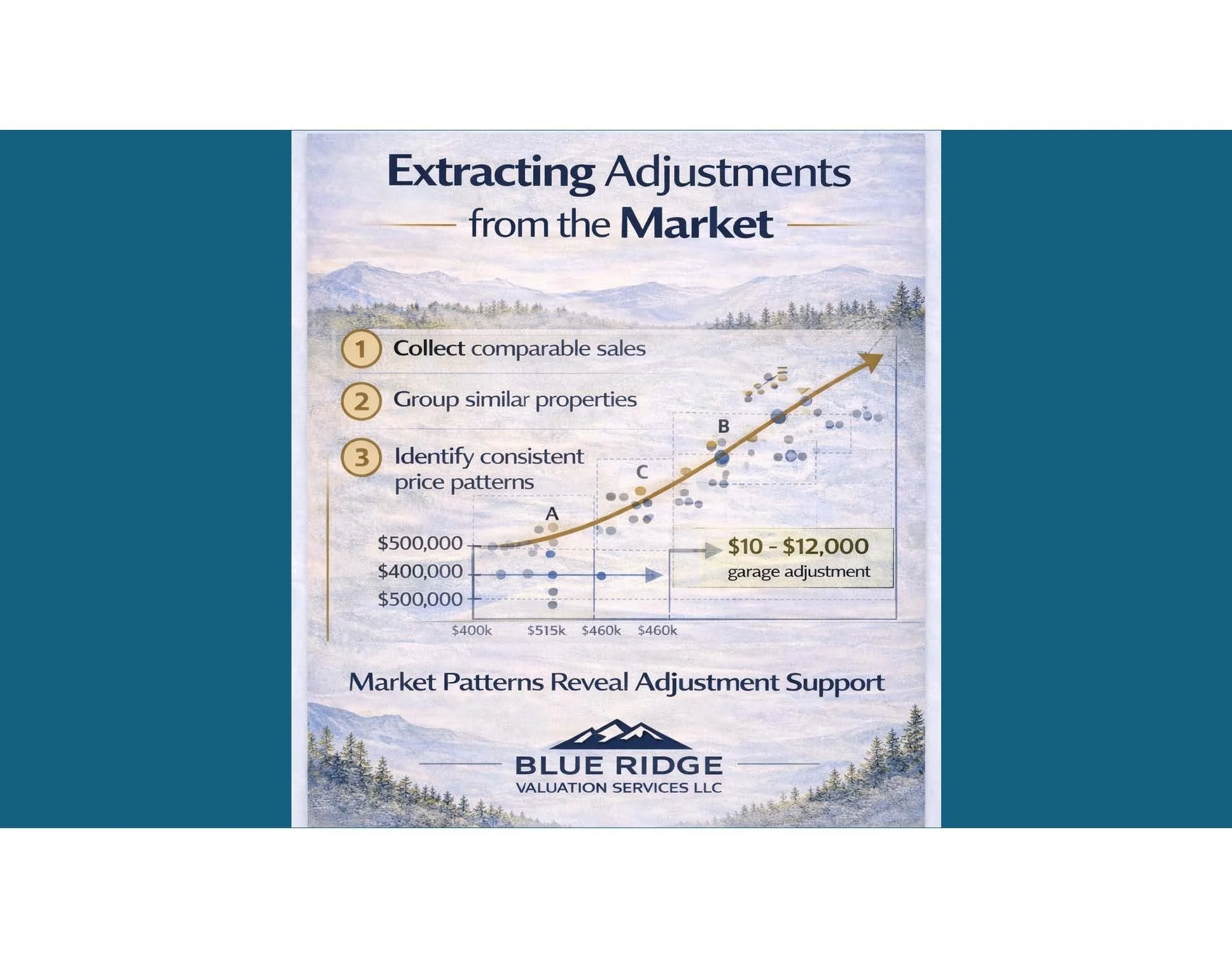
Article 6 — Grouped Data & Market Extraction Methods
Paired sales are not always available. That does not mean you are out of options.
Article 6 of The Adjustment Series is live: Grouped Data & Market Extraction Methods.
When the market does not provide clean matched pairs, grouped data and market extraction methods expand the analytical toolkit significantly. This article examines how these methods work, when they are most appropriate, and what the documentation requirements look like — including the critical importance of controlling for confounding variables and the analytical power that comes from combining multiple methods.
When paired sales, grouped data, and qualitative observations all point in the same direction, the cumulative weight of that evidence is compelling — even when no single method is conclusive on its own.